Rail
25 Years of RHEDA 2000® – A Quarter-Century of Railroad History! 🚄
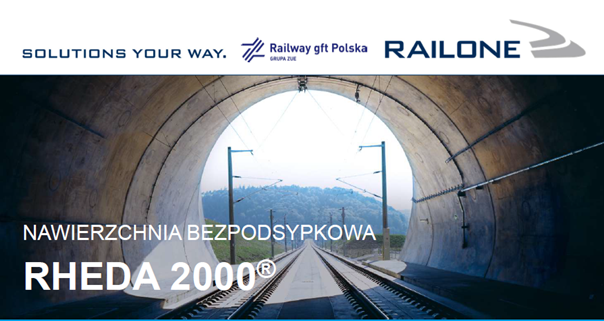
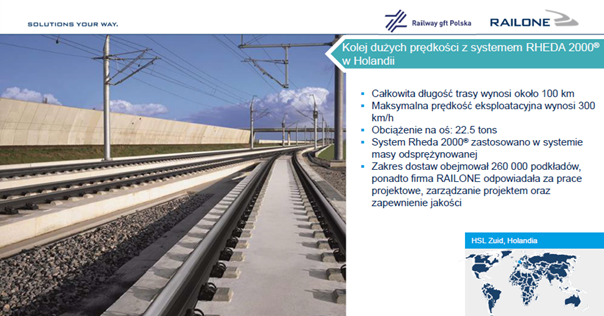
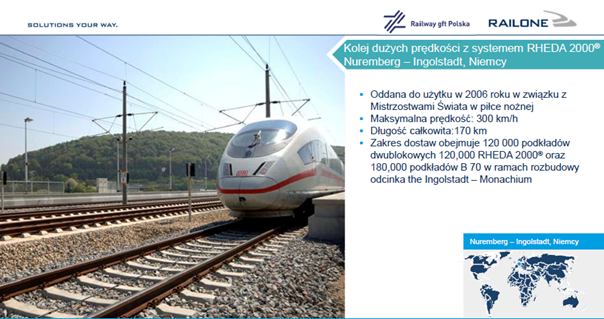
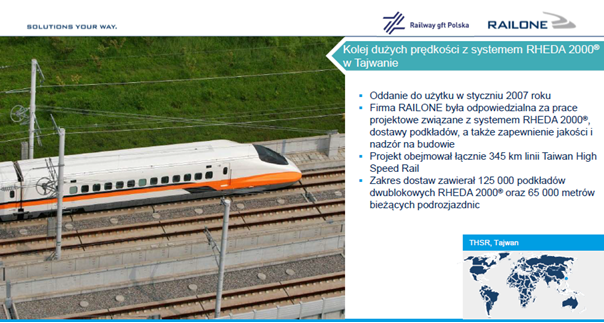
The year 2000 was a breakthrough moment in the development of railway infrastructure. The evolution of the RHEDA ballast-free pavement system, from the classic "Rheda-Berlin" solution to the modern RHEDA 2000® system, represented a true technological leap towards greater efficiency, design optimization, and weight reduction.
From Rheda-Berlin to RHEDA 2000® – the evolution of technology
The Rheda-Berlin system was widely used in the 1990s, including during the construction of the Hanover–Berlin railway line. This solution was distinguished by high stability and durability, but its construction was massive, heavy, and time-consuming to implement. This was mainly due to the use of a concrete basin in the substructure structure, where sleepers were placed.
At the turn of the millennium, engineers faced the challenge of developing a solution tailored to the needs of high-speed rail – faster to build, lighter, and easier to maintain.
The response to these needs was the RHEDA 2000® system, with prototype development starting as early as 1978.
The first operational tests of the system were conducted in 2000 on the Leipzig–Gröbers section. After positive test results, including tests at speeds exceeding 350 km/h, the technology was widely implemented in Germany.
The system was applied, among others, on the Cologne–Rhine-Main line and later on the Nuremberg–Ingolstadt route. The development of railway infrastructure was also intended to enable efficient connections between the most important German cities in connection with hosting the 2006 FIFA World Cup.
The success of these implementations contributed to establishing RHEDA 2000® as one of the key solutions for ballast-free pavement for high-speed rail.
Key technological innovations of RHEDA 2000®
What made RHEDA 2000® such a significant step in the development of railway technology?
1. Giving up the concrete basin
This is one of the most important differences compared to the Rheda-Berlin system. In the older solution, two-block sleepers were set in a massive concrete basin. RHEDA 2000® eliminates the need for this component, simplifying pavement construction.
2. Integrated two-block sleeper design
The system uses lattice sleepers directly connected to the reinforcement of the concrete slab. Thanks to this, the sleepers and slab form a uniform, monolithic structure.
3. Lower structural height
Eliminating the concrete basin significantly reduced the overall height of the pavement structure. This translates into lower material consumption and a reduction in the overall weight of the system.
4. Optimization of the construction process
The system was designed with mechanization and streamlining of execution processes in mind. It enables more precise and faster positioning of the track framework, followed by concreting in a single step.
25 years of development and innovation
A quarter century of RHEDA 2000® is a history of technological development that has met the growing demands of modern rail transport. The combination of durability, optimized design, and execution efficiency has made the system an important solution in building modern railway infrastructure.
25 years of RHEDA 2000® – a technology that sets the direction for railway development! 🚄